Monte Carlo Casino History
How the Monte Carlo Casino Saved Monaco: A History
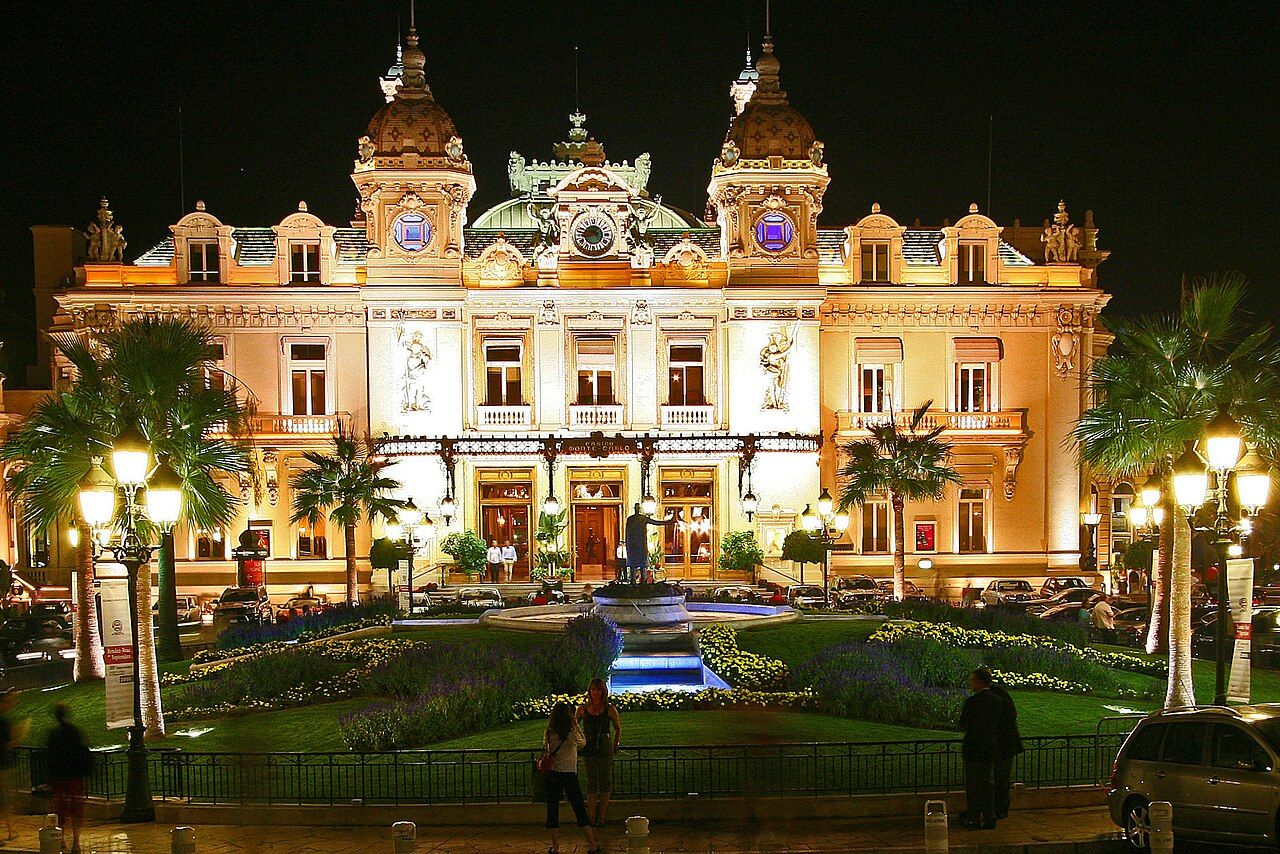
How did a casino save Monaco? In the 1860s the principality was close to bankruptcy, and Prince Charles III turned to licensed gambling to keep it afloat. Within a few years the casino was paying for the state, and in 1869 the prince abolished direct taxation.
A principality in crisis
Monaco's trouble began with its own territory. In 1848 the towns of Menton and Roquebrune broke away from the Grimaldis, and in 1861 Charles III ceded them to France. They had supplied much of the principality's income, and what remained was a small rock with no mining or manufacturing industry to speak of. Encyclopaedia Britannica links the prince's decision to open a casino directly to the imminent threat of bankruptcy.
The first gaming houses of the late 1850s struggled to attract players, in part because Monaco was hard to reach. The turning point came in 1863, when the gaming concession went to François Blanc (1806–1877), who had already made a fortune running the casino at Bad Homburg in Germany. That year Charles III conceded the exploitation of the Spélugues plateau to the Société des Bains de Mer et du Cercle des Étrangers, and the Monaco government credits Blanc with the company's real expansion after its unsuccessful start.
Blanc, the railway and a new name
Blanc brought capital, publicity and experience, and the railway along the coast reached Monaco in 1868, bringing visitors from Nice and beyond. The Monaco government notes that the concession was meant to attract an affluent clientele, and that the company took responsibility for several public services, including roads, gas, water, transport and the publication of legal announcements. The casino company, in other words, built much of the town.
On June 1, 1866, Charles III decreed that the facilities of the Société des Bains de Mer would henceforth be called Monte-Carlo, after the prince himself. The present building took shape later: the architect Charles Garnier, designer of the Paris Opera, added the opera hall and the grand façade in 1878–1879, and Britannica dates the present complex to 1878.
Who may play, and who pays tax
Not everyone was welcome at the tables. Citizens of Monaco are forbidden from entering the casino's gaming rooms. The rule is restated in modern law: law no. 1.103 of June 12, 1987 bars Monégasque citizens from gambling in the casino and also excludes employees of the state and public bodies from playing in the principality's gaming houses. The casino was built for foreign money, not for the prince's own subjects.
The payoff came quickly. A 1912 account of Monaco states that Charles III "abolished with one stroke of the pen all direct taxation," with the decree signed on February 8, 1869. A recent scholarly article describes it as the abolition of all direct taxation on Monégasque residents and business activity. Sources word the scope of the measure differently, so the safest statement is that direct taxation ended in 1869, paid for by the casino concession.
Monaco's prosperity did not arrive with a single lucky opening; it followed years of false starts and one very capable operator. The bargain Charles III struck still shapes the principality today: foreigners gamble, citizens stay away from the tables, and the absence of direct taxation remains one of Monaco's defining features.
Dates and details follow the sources named below. Where historians disagree or a story is a legend, the article says so. Corrections are welcome through the contact page.
Sources
- Encyclopaedia Britannica: britannica.com
- Gouvernement de Monaco: gouv.mc
- Gouvernement de Monaco: gouv.mc