The First Slot Machine
Who Invented the Slot Machine? Charles Fey and the Liberty Bell
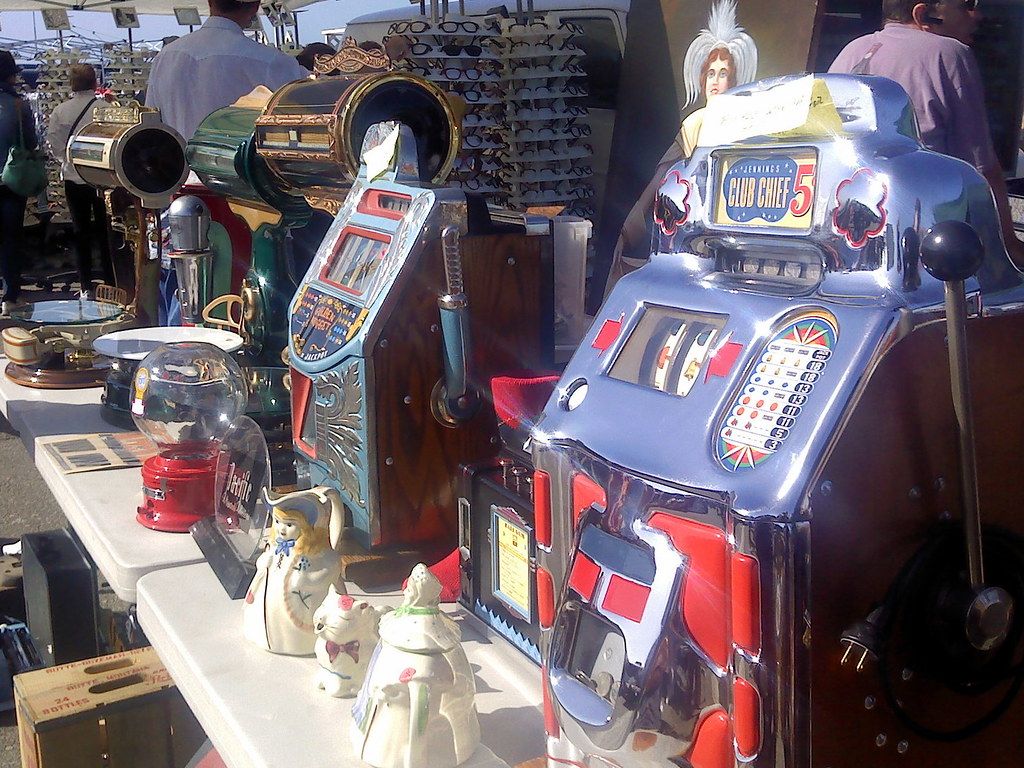
Charles Fey is the name most often given for inventing the slot machine. His Liberty Bell, built in San Francisco in the late 1890s, was the first three-reel machine to pay out automatically, but the story starts a few years earlier with a poker machine from Brooklyn and runs on to electromechanical and video slots.
A poker machine in Brooklyn
The story starts with Sittman and Pitt of Brooklyn, New York. In 1891 the partners developed a coin-operated gambling machine based on poker. It had five drums carrying 50 card faces in total, and the player hoped the drums would stop on a winning poker hand.
The machine had no automatic payout. A winning player had to claim the prize from the staff of the bar where it stood, and the machine itself could not settle the bet. That was its main limitation, and it is why Sittman and Pitt are usually treated as a precursor rather than the inventors of the slot machine.
Charles Fey and the Liberty Bell
Fey was a mechanic in San Francisco. His Liberty Bell had three reels and five symbols: hearts, spades, diamonds, horseshoes and a cracked Liberty Bell. What set it apart was the payout: it was the first three-reel machine to pay winners automatically, so no bartender had to judge a hand or hand over a prize.
The exact year the Liberty Bell was created is hard to pin down. A California historical marker gives 1895, the SFO Museum gives 1898, and another account says 1899, so it is safest to date the machine to the second half of the 1890s. According to the same marker, Fey manufactured Liberty Bell machines at 406 Market Street from 1897 to 1906, when the workshop was destroyed in the earthquake and fire.
The fruit symbols that still appear on slots came later. In the usual account, machines that dispensed chewing gum and showed fruit flavors on their reels, the so-called Bell-Fruit gum machines, were used to get around bans on gambling devices, since they could be presented as vending machines. The details of how this worked in each jurisdiction are not well documented.
From reels to electromechanics and video
The next landmark came from Bally. Its Money Honey, introduced in 1963, is described as the first electromechanical slot machine; one source gives 1964 instead. It kept spinning reels but used electrical components to run the game and pay out, which made larger automatic payouts possible.
Video slots, which replaced physical reels with a screen, came later still. Which machine deserves the title of the first video slot is not settled in the sources, and no single maker or date can be named with confidence.
"Who invented the slot machine" is shorthand for a sequence of inventions, not a single moment. Sittman and Pitt built a gambling machine that still needed a person to pay, Fey made the machine settle bets itself, and Bally moved it into electromechanics. That shift from manual payment to automatic payout is what turned a saloon novelty into the machine that fills casino floors today, and it is why Fey's name, rather than any earlier one, stays attached to the invention.
Dates and details follow the sources named below. Where historians disagree or a story is a legend, the article says so. Corrections are welcome through the contact page.
Sources
- California State Parks: ohp.parks.ca.gov
- San Francisco Museum of Modern Art: sfomuseum.org