Baccarat, Chemin de Fer, Punto Banco
Baccarat vs Chemin de Fer vs Punto Banco: What Is the Difference?
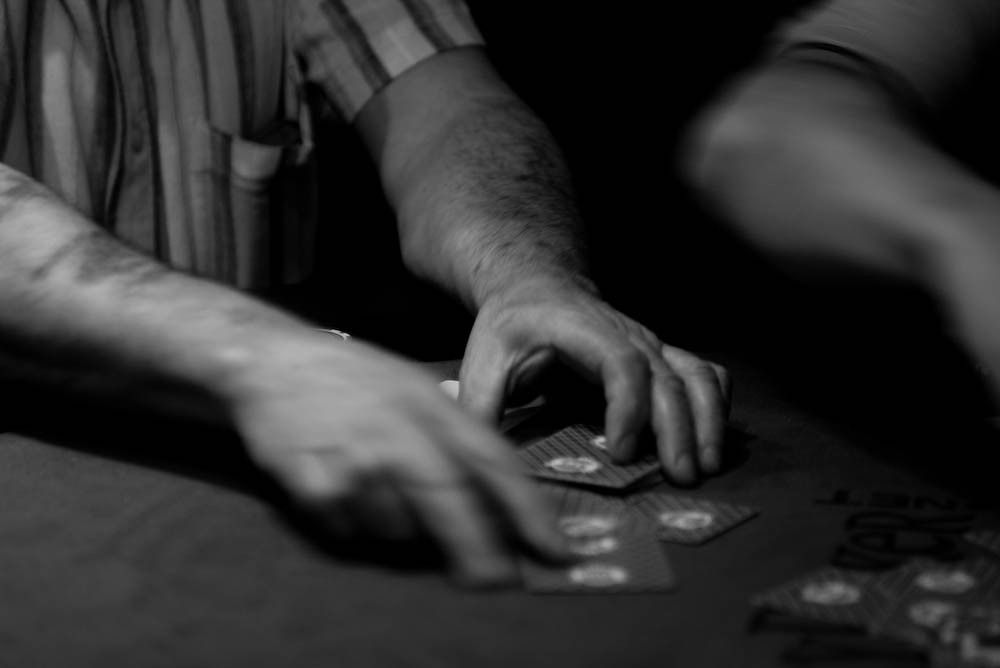
Baccarat banque, chemin de fer and punto banco share the same core: hands of two or three cards, counted so that only the last digit of the total matters, with nine the best score. They differ in who holds the bank and who decides whether to draw a third card, and that difference traces the game's path from European salons to casinos run on fixed rules.
Baccarat banque and chemin de fer
Where baccarat began is uncertain. It is usually traced to Italy or France, or to both, but no firm record settles the question, and the early history is best treated as open.
In baccarat banque, also called baccarat à deux tableaux, the bank is permanent. According to the 1911 Encyclopaedia Britannica, the player who offers to risk the largest sum takes the banker's seat, and the game uses three packs of cards. The banker plays against two halves of the table, the two "tableaux," and stakes could even be placed à cheval on the line between them, winning only if both sides won and losing if both lost.
Chemin de fer is described as a later variant. An 1883 account cited by the card-game reference site Pagat describes the players taking turns to be banker, dealing for as long as they kept winning and passing the bank on when they lost. The same Britannica entry gives six full packs, shuffled by a croupier and then by any player who wishes. The banker announces how much he is willing to risk, and the total bet against him cannot exceed that amount. The name means "railroad" in French and may refer to the dealing shoe traveling around the table or to the game's speed.
In both of these older forms, the players make choices. The person holding the player's hand may decide whether to draw in certain situations, and the banker has some freedom as well, so baccarat banque and chemin de fer reward attention and nerve as much as luck.
Punto banco and the casino version
Punto banco removed those choices. According to one gambling history, it was standardized at the Capri Hotel in Havana in 1958 by Tommy Renzoni and brought to the Sands in Las Vegas in 1959. The casino deals both hands, no player ever holds the bank, and the player only chooses whether to bet on "punto" (player) or "banco" (banker). Whether a third card is drawn is decided entirely by a fixed table of rules.
| Baccarat banque | Chemin de fer | Punto banco | |
|---|---|---|---|
| Who banks | One player, the highest bidder, for the whole session | Players in turn; the bank passes on a loss | The casino |
| Third-card decision | Partly the players' choice | Partly the players' choice | Fixed rules, no choice |
| Where it grew | France and elsewhere in Europe | France and elsewhere in Europe | Havana, then Las Vegas; today the main casino form |
The fixed-rule version is the one that spread. It is simple to deal, needs no skilled players at the table, and suits a casino that wants to control the bank itself. Baccarat in this form became the main table game of Macau.
What the three games show today
The three games are one family with three ways of handling the bank. The historical change that made modern baccarat look standardized was the shift from player-managed banking, where the bank moved around the table and players made decisions, to fixed casino dealing, where the rules decide everything. What was once a salon game of personal risk became an industrial casino game, without changing the cards themselves.
Dates and details follow the sources named below. Where historians disagree or a story is a legend, the article says so. Corrections are welcome through the contact page.
Sources
- *1911 Encyclopædia Britannica/Baccarat* (Wikisource): en.wikisource.org
- Pagat, *Chemin De Fer*: pagat.com